
Introduction
Throughout history, major global crises have often accelerated technological innovation and industrial transformation. One of the most interesting examples comes from the soap and detergent industry, whose modern development was heavily influenced by global wars. During the early 20th century, particularly during World War I and World War II, shortages of raw materials forced scientists and manufacturers to rethink traditional soap production.
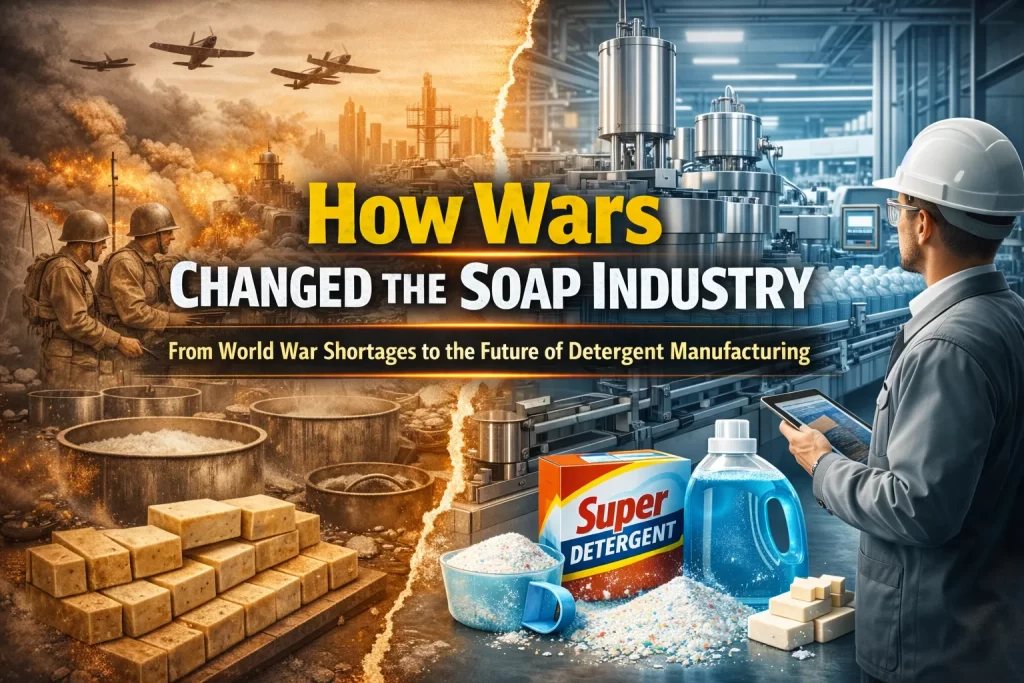
What began as a crisis eventually led to the birth of modern synthetic detergents, transforming the cleaning industry worldwide. Today, with global supply chains again facing pressure due to geopolitical tensions, rising costs, and resource constraints, many experts believe that another industrial shift may be on the horizon.
Soap Before the World Wars
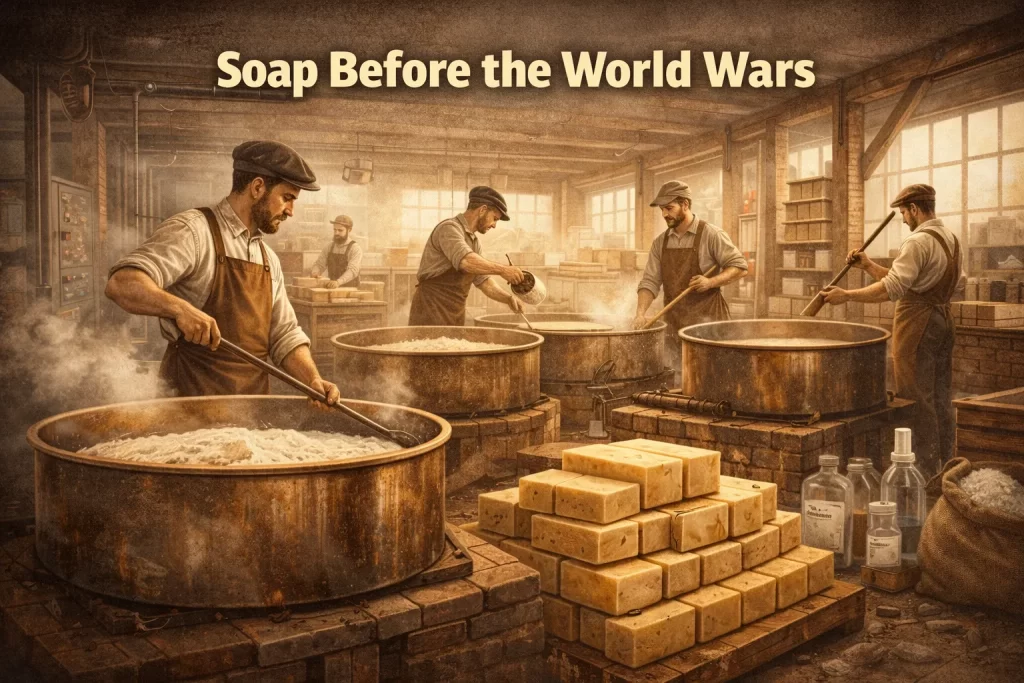
Before the world wars, soap production was relatively simple and relied on natural raw materials. Traditional soap was mainly produced using:
-
Animal fats (tallow)
-
Vegetable oils such as coconut oil and palm oil
-
Alkali substances like sodium hydroxide
The process known as saponification had been used for centuries. However, soap manufacturing was heavily dependent on agricultural and animal-based resources.
When war began, these resources became scarce because they were diverted to military use. For example:
-
Animal fats were required for food supplies and explosives production.
-
Vegetable oils were used in various military applications.
As a result, soap production became increasingly difficult.
The Turning Point: Synthetic Detergents

During World War I and World War II, the shortage of fats and oils forced chemists to search for alternatives. This led to the invention of synthetic detergents, which were made from petrochemical derivatives rather than natural fats.
Synthetic detergents offered several advantages:
-
They worked better in hard water.
-
They produced more stable foam and cleaning power.
-
They could be manufactured without relying on agricultural resources.
By the late 1940s and 1950s, detergents rapidly replaced traditional soap in many industrial and household applications. This innovation marked a major revolution in the cleaning industry.
Crisis Creates Opportunity
The transformation of the soap industry demonstrates a key lesson: shortages often drive innovation.
What started as a supply crisis led to:
-
The rise of chemical engineering in cleaning products
-
Mass production of detergent powders and liquids
-
The creation of entire new manufacturing industries
Companies that adapted quickly during wartime shortages became the pioneers of the modern detergent market.
Today’s Global Challenges
In the modern world, the soap and detergent industry is once again facing several challenges:
-
Rising raw material prices
-
Supply chain disruptions
-
Geopolitical conflicts
-
Environmental regulations
-
Demand for sustainable products
These pressures are forcing manufacturers to rethink traditional production methods once again.
Could Another Revolution Be Coming?
Many experts believe the industry may be entering another transformative phase. Potential innovations include:
1. Bio-Based Surfactants
Scientists are developing detergents derived from renewable biological sources, reducing dependence on petroleum chemicals.
2. Waterless Cleaning Products
New technologies are enabling cleaning products that require less water, which is critical in regions facing water scarcity.
3. Eco-Friendly Soap Manufacturing
Manufacturers are exploring zero-waste production processes and biodegradable ingredients.
4. Smart Manufacturing Plants
Automation and advanced machinery are transforming how soaps and detergents are produced. Modern plants now include:
-
Automatic soap making lines
-
High-efficiency detergent mixing systems
-
Energy-efficient drying technologies
Turning Challenges into Opportunity
For manufacturers and entrepreneurs, the lesson from history is clear:
Every crisis carries the seeds of innovation.
Just as wartime shortages led to the invention of synthetic detergents, today’s global challenges could lead to:
-
More sustainable products
-
More efficient production technologies
-
New business opportunities in emerging markets
Industries that adapt quickly will be the ones that shape the future.
Conclusion
The history of soap and detergent manufacturing proves that innovation often emerges from the most difficult circumstances. The shortages during World War I and World War II forced scientists to develop synthetic detergents, fundamentally changing the global cleaning industry.
Today, as the world faces new economic and geopolitical challenges, the industry may once again be on the verge of transformation. The key question is not whether change will come, but who will lead the next revolution in soap and detergent manufacturing.