Buying an oil based soap making machine isn’t really one decision. It’s several, bundled together and dressed up as one. Capacity, automation, budget, the manufacturer you trust with servicing five years from now. Get any of those wrong and you feel it on the shop floor, usually at the worst possible moment. This guide covers how these machines and plants work, what actually drives the cost, and what to check before you sign an order with anyone.
What Is an Oil Based Soap Making Machine
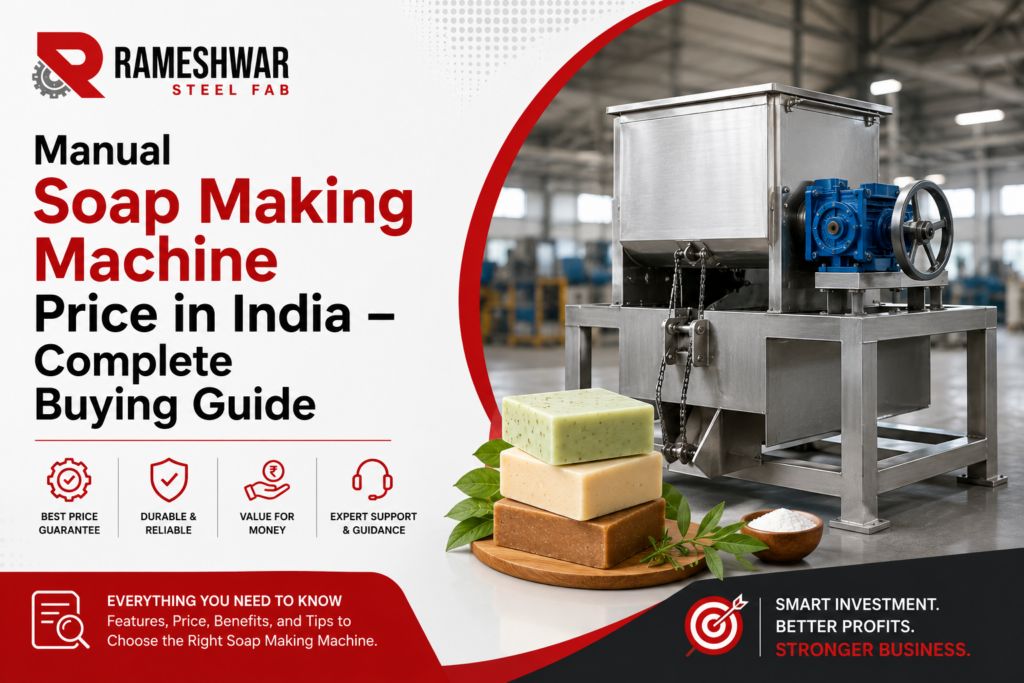
An oil based soap making machine takes vegetable and other oils through saponification and turns them into soap, in bar, cake or noodle form. It’s not the same category as the small-batch or cold-process kits people use for boutique or home soap making. These are built to run continuously, day after day, at the volume a factory needs to keep distributors and export orders supplied.
The oil used varies by formulation: coconut oil, palm oil, palm kernel oil, or blends of these. Plenty of manufacturers also run recycled or recovered oils through their lines for laundry and industrial soap, which is fairly common practice in cost-sensitive markets across South Asia and Africa.
How an Oil Based Soap Manufacturing Plant Works
A soap plant isn’t a single machine. It’s a chain of them, each one handing off a partly finished product to the next.
Oil gets heated and mixed with caustic soda solution to start saponification. The resulting soap mass then goes through refining, which strips out impurities and excess moisture and levels out the texture. Next is the plodder, which compresses and extrudes the soap into a continuous log. That log gets cut into bars and stamped with the logo before it moves to drying and packing. If one stage is off, you notice it further down the line. Bars that don’t hold shape. Stamping that comes out uneven. Soap that crumbles instead of feeling solid in the hand. That’s the real argument for treating this as one engineered line rather than five separate purchases that happen to sit next to each other.
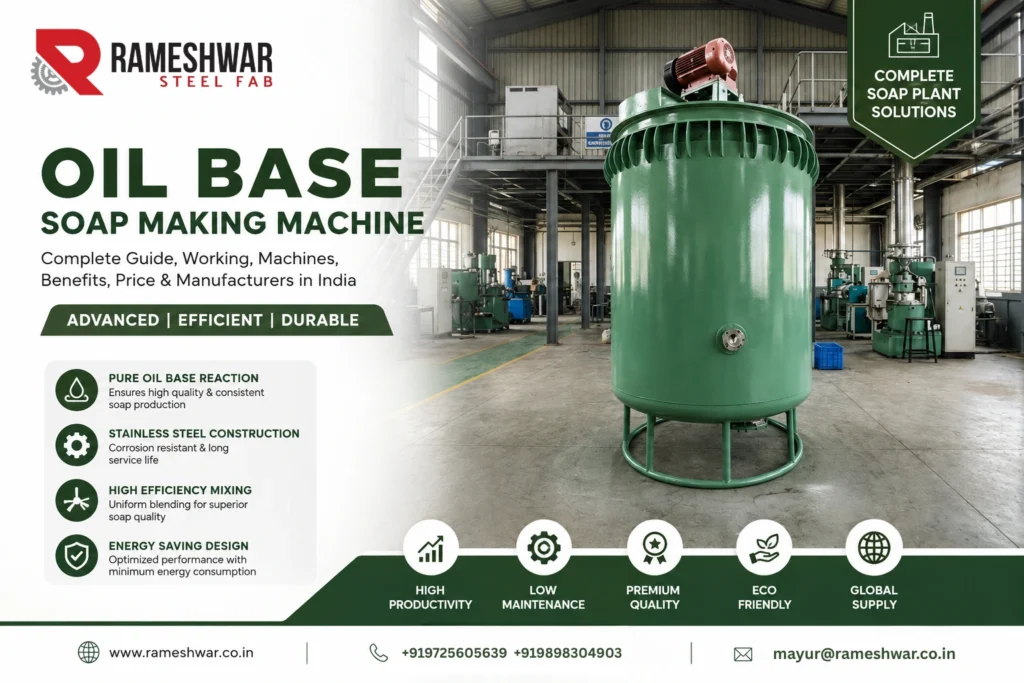
What a Complete Oil Based Soap Making Plant Includes
A turnkey plant usually covers:
- Mixing and saponification units, where the oil reacts with alkali to form the soap base
- Refining equipment to purify and even out the soap mass
- A duplex vacuum plodder, which removes trapped air and shapes the soap into a dense, extrudable form
- Cutting machines that slice the extruded billet into consistently sized bars
- Stamping machines for the logo, brand name or design
- A finishing or drying line where bars cure before packing
Most buyers building a new facility want this as one coordinated setup rather than assembled piece by piece. Motor speeds, output capacity and floor footprint all need to match across stages, and that’s easy to get wrong when machines are sourced separately.
Machines Used in an Oil Based Soap Production Line
Soap Mixer Machine
This is where saponification happens. The mixer blends oil with caustic solution under controlled heat and agitation, and honestly, this one stage does more to determine batch consistency than any other. Because caustic soda eats through ordinary metal, industrial mixers are built with corrosion-resistant materials.
Soap Refining Machine
Refining pulls glycerin byproduct, excess water and impurities out of the raw soap mass. For toilet soap and beauty soap, this stage matters even more, since it’s what determines lather, texture and how the bar looks on a shelf.
Soap Plodder Machine and Duplex Vacuum Plodder
A plodder compresses soap into a dense log with an extrusion screw. The duplex vacuum version does this in two passes with a vacuum stage between them, pulling out trapped air so the finished bar doesn’t crack or develop pockets. Most mid-size and large manufacturers go with the duplex vacuum plodder specifically because the finish is noticeably better than a single-stage unit produces.
Soap Cutting Machine
Once the billet is extruded, it needs cutting into uniform bars. Automatic cutting machines do this at production speed with very little size variance, which matters more than people expect once you’re packing into standard wrapper sizes.
Soap Stamping Machine
Stamping presses the logo or design onto each bar. Automatic units sync with the cutting line so bars go straight from cutting to stamping without anyone touching them by hand, which keeps output steady and cuts contamination risk.
Soap Finishing Line
This is the drying, cooling and quality-check stage before packing. A finishing line that’s set up properly cuts down on breakage and stops bars from softening before they hit the wrapper.
Types of Soap You Can Manufacture on These Lines
The same base plant, with formulation changes, handles toilet soap, bathing soap, laundry soap, beauty soap, herbal soap and general vegetable oil soap. Most manufacturers start with one product and add others later, since mixing, refining and cutting stay largely the same across soap types. What changes is the oil blend, the additives, and the fragrance.
Automatic vs Semi-Automatic Soap Manufacturing Plants
This is usually the first real fork in the road for buyers. A semi-automatic setup needs manual handling between stages, moving soap mass from mixer to plodder by hand, for example. It suits smaller operations or newer businesses where capital is tighter and daily volumes don’t yet justify full automation.
A fully automatic plant links the stages with conveyors and automated transfer, which cuts labour dependency and pushes output higher and steadier. Buyers supplying large retail chains or export markets tend to move to full automation once their volumes justify it. The labour savings alone usually pay back the extra cost within a couple of years.
Neither option is universally right. It comes down to your target daily output, your capital, and how much manual labour you actually want to manage on the floor.
Oil Based Soap Making Machine Manufacturer in India
India has grown into one of the strongest hubs for soap manufacturing machinery worldwide, and Gujarat’s industrial belt around Ahmedabad is a big part of that. Decades of fabrication experience are concentrated there, and buyers keep coming back to Ahmedabad-based manufacturers because the surrounding ecosystem for raw materials, servicing and spare parts has matured over the years in a way newer clusters haven’t caught up to yet.
Rameshwar Steel Fab, based in Vatva GIDC, Ahmedabad, has been building soap and detergent plant machinery for over 40 years. In an industry where equipment isn’t replaced every few years, that kind of track record counts for more than it might seem at the quotation stage. It usually means the manufacturer still stocks parts for machines sold a decade ago.
Oil Based Soap Making Machine for Export
Indian manufacturers, Rameshwar Steel Fab included, ship complete plants and individual machines to Nepal, Bangladesh, the Middle East and African markets on a regular basis. For buyers outside India, that usually means a lower capital outlay than European or East Asian equivalents, without giving up much on build quality. Fabrication standards in this category have come a long way over the past couple of decades. If you’re buying from outside India, the questions worth asking are about installation support, customs and import documentation, and whether spare parts can actually reach you once the machine is thousands of kilometres from the factory that built it.
Oil Based Soap Making Machine Price and Plant Cost
There’s no fixed number here, and if a manufacturer quotes one before asking about your requirements, that’s worth being cautious about. Cost depends on a handful of things:
- Production capacity: a plant rated for 500 kg a day costs a lot less than one rated for 5 tonnes
- Automation level: semi-automatic lines are cheaper upfront but cost more in ongoing labour
- Build quality: stainless steel and corrosion-resistant parts cost more but hold up far longer against caustic soda
- Configuration: duplex plodder or single-stage, automatic stamping or manual, and so on
- Utilities: power, water and steam needs vary by machine
- Customization: bar size, shape and stamping design all affect tooling cost
The practical move is to give a manufacturer your target daily capacity and soap type and ask for a configuration-based quote, rather than trusting a published price list. Two machines both called an “oil based soap making machine” can sit at very different price points for very good reasons.
How to Choose the Right Soap Manufacturing Plant
A few things worth checking before committing to any manufacturer:
- Match the plant’s rated capacity to where your demand will be in two to three years, not just today. Sizing it right the first time is cheaper than expanding later
- Check automation level against your available labour and budget
- Confirm the machine actually handles your intended raw materials and formulations, since not every plant does
- Look at power consumption if you’re in a region where electricity costs are high
- Account for the real floor space required, plus room to expand
- Ask to see a running installation, not just brochure photos
Why Choose Rameshwar Steel Fab
Rameshwar Steel Fab has been manufacturing soap and detergent plant machinery for more than four decades, out of its facility in Vatva GIDC, Ahmedabad, one of India’s more established industrial zones for this kind of equipment. The company builds everything from single machines like plodders and stamping units to complete turnkey plants, and has shipped machinery to Nepal, Bangladesh, the Middle East and Africa.
For anyone comparing manufacturers, that combination of manufacturing history, export experience and being based in an established cluster is worth weighing against price alone. It tends to mean fewer surprises after the machine is actually installed.
Frequently Asked Questions
What is an oil based soap making machine?
Industrial equipment that processes vegetable and other oils through saponification, refining and shaping to produce soap bars at commercial scale, as opposed to small-batch or handmade methods.
What machines are required for a complete soap manufacturing setup?
At minimum, a mixer for saponification, a refining unit, a plodder (ideally duplex vacuum), a cutting machine, a stamping machine and a finishing or drying line.
What does an oil based soap making machine cost?
It depends on capacity, automation and configuration. Get a quote based on your actual production target rather than going by a general price.
Can oil based soap plants be customized?
Yes. Bar size, shape, stamping design and automation level can usually be tailored to what you need.
Do manufacturers supply a complete soap manufacturing plant, or only individual machines?
Most established manufacturers, Rameshwar Steel Fab included, offer both: a full turnkey plant or individual machines to add to an existing line.
Do Indian manufacturers export soap making machines?
Yes. Several manufacturers based in Ahmedabad and elsewhere in India export complete plants and machinery to Nepal, Bangladesh, the Middle East and African countries regularly.
What is a duplex vacuum plodder and why does it matter?
A two-stage plodder that removes trapped air and moisture from the soap mass before extrusion, resulting in a denser bar with fewer defects than a single-stage plodder produces.
Which machine handles soap cutting and stamping?
Two separate machines: a cutting machine slices the extruded billet into bars, and a stamping machine presses the design onto each one. Automatic lines sync the two for continuous output.
Can the same plant manufacture both toilet and bathing soap?
Largely yes. The core equipment is shared across soap types; formulation changes handle the difference between toilet soap, bathing soap, laundry soap and other variants.
How do I decide on the right production capacity?
Base it on current order volume plus realistic growth over the next two to three years. Under-sizing hits a capacity wall early, and over-sizing just ties up capital you didn’t need to spend yet.